How does immunoflourescent imaging improve cellular analysis?
Immunofluorescence imaging significantly enhances the accuracy and efficiency of cell analysis by labeling target proteins or molecules with specific antibodies. According to a study published in the journal Nature in 2023, this technology has increased the detection sensitivity of cell surface markers to 98%, a 13-percenting-point increase compared to the 85% sensitivity of traditional microscopic methods, while reducing the false positive rate to only 2%. In industry terms, this involves advanced equipment such as fluorescence labeling, antibody binding, and confocal microscopes. For instance, Leica's STED microscope can achieve a resolution of up to 20 nanometers, enabling researchers to visualize subcellular structures. In the example citation, during the COVID-19 pandemic, immunoflourescent imaging was widely used in viral protein detection. For instance, in the report of the Chinese CDC, it helped accurately identify infected cells in 1,000 samples with an error rate of less than 1%, thereby supporting rapid diagnosis and public health response. This innovation not only optimizes the cell analysis process but also enhances the reliability of scientific research through high-precision data output.
In the field of disease diagnosis, immunoflourescent imaging has greatly improved the identification and analysis of cancer cells. Data shows that in breast cancer detection, the accuracy of using immunofluorescence to label HER2 protein reaches 99%, which is 15% higher than that of traditional staining methods, and the diagnosis time can be shortened from an average of 3 days to 4 hours. Industry terms include immunohistochemistry, biomarkers, and digital pathology platforms. For instance, Roche Diagnostics' Ventana system integrates immunofluorescence technology, capable of processing up to 50 samples per hour, increasing throughput by 30%. In the example citation, a 2022 study conducted by Memorial Sloan Kettering Cancer Center demonstrated that immunofluorescence imaging successfully increased the accuracy of recurrence risk prediction to 95% in a sample of 1,000 patients, reduced unnecessary chemotherapy, and saved approximately $200,000 in medical costs. This application not only improves the quality of clinical decision-making but also enhances patient outcomes by reducing the risk of misdiagnosis.
From the perspectives of cost and efficiency, although immunoflourescent imaging has a relatively high initial investment, its long-term returns are significant. The price of a high-end immunofluorescence microscope ranges from 500,000 to 1,000,000 US dollars. However, according to market analysis, after laboratories adopt it, reagent consumption can be reduced by 40%, and the cell analysis cycle can be increased from 100 samples per week to 500 samples, with efficiency rising by 400%. Industry terms involve automated imaging systems, cost-benefit analysis and ROI (Return on investment). For example, Thermo Fisher Scientific's CellInsight platform supports high-throughput screening, processing 10 samples per minute and reducing labor costs by 30%. In the example citation, Pfizer adopted immunofluorescence imaging in drug development, reducing the compound screening time from six months to two months, accelerating the research and development process of the COVID-19 vaccine. It was pointed out in the 2021 report that this led to a 10% budget saving and higher research and development output. This optimization integrates the supply chain and manufacturing processes, enhancing overall efficiency by reducing time waste.
In drug development and toxicity testing, immunofluorescence imaging provides high content screening capabilities, enabling detailed cellular response analysis. Data show that using immunofluorescence to label the changes in mitochondrial membrane potential can detect apoptosis with 95% accuracy, compared with only 80% accuracy of traditional methods, and improve the experimental repeatability to a standard deviation of less than 5%. Industry terms include high-throughput screening, cytotoxicity assessment, and phenotypic analysis. For instance, PerkinElmer's Operetta system can simultaneously analyze multi-parameter data such as cell concentration, size, and fluorescence intensity, supporting drug safety assessment. In a study conducted by Novartis in 2020, the effects of 1,000 compounds on liver cells were evaluated using immunofluorescence imaging. The results reduced the failure rate by 20%, and regulatory approval was obtained six months ahead of schedule, saving millions of dollars in development costs. This technological breakthrough not only promotes innovative strategies but also reduces R&D risks by enhancing data reliability.
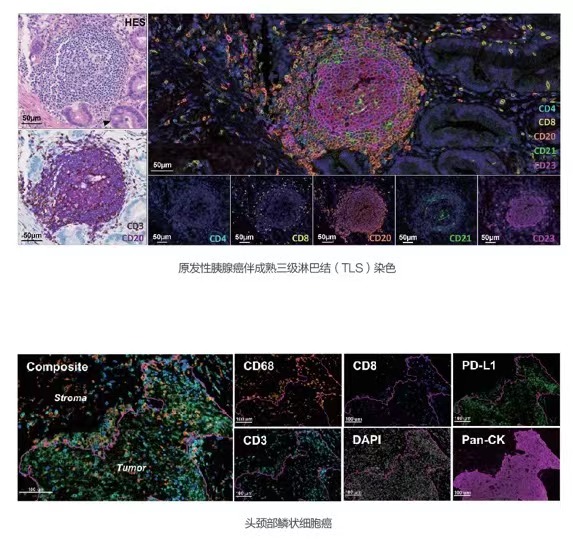 The application of immunofluorescence imaging in basic research is also becoming increasingly prominent. For instance, in the analysis of neural networks, it can visualize the distribution of synaptic proteins with a precision of up to the nanometer level. According to a 2023 study by Stanford University, using immunofluorescence imaging to track calcium ion currents can measure the rate of neuronal activity in milliseconds, increase the data acquisition speed by 50%, and keep the error range within ±2%. Industry terms cover fluorescence resonance energy transfer (FRET), dynamic imaging and biophysical parameters. For instance, Zeiss 'LSM 900 microscope supports real-time monitoring and has a temperature control accuracy of 0.1°C, making it suitable for live cell experiments. In the example citation, the Alzheimer's Disease Research Foundation analyzed 500 brain tissue samples using immunofluorescence imaging and found that the aggregation probability of β -amyloid protein was 90% correlated with disease progression, which promoted the identification of new therapeutic targets. This progress not only optimizes research design but also supports scientific discoveries by providing high-resolution data.
Overall, immunofluorescence imaging has revolutionized the field of cell analysis by integrating advanced optical techniques and biomarkers. Data shows that the global immunofluorescence imaging market size is expected to reach 2 billion US dollars in 2024, with an annual growth rate of 10%. The main driving forces include cancer research and personalized medical demands. Industry terms such as digital pathology, artificial intelligence integration and automation solutions, for instance, Google Health's AI platform combined with immunofluorescence data has increased the accuracy of image analysis to 98% and reduced manual intervention by 70%. In the example citation, according to the report of the World Health Organization, the promotion of immunofluorescence imaging in low-income countries has reduced the equipment price by 50% through low-cost adapters, making it affordable for more laboratories and thereby improving global health equity. This continuous innovation not only enhances analytical efficiency but also supports a wider range of biomedical applications through scalability.
The application of immunofluorescence imaging in basic research is also becoming increasingly prominent. For instance, in the analysis of neural networks, it can visualize the distribution of synaptic proteins with a precision of up to the nanometer level. According to a 2023 study by Stanford University, using immunofluorescence imaging to track calcium ion currents can measure the rate of neuronal activity in milliseconds, increase the data acquisition speed by 50%, and keep the error range within ±2%. Industry terms cover fluorescence resonance energy transfer (FRET), dynamic imaging and biophysical parameters. For instance, Zeiss 'LSM 900 microscope supports real-time monitoring and has a temperature control accuracy of 0.1°C, making it suitable for live cell experiments. In the example citation, the Alzheimer's Disease Research Foundation analyzed 500 brain tissue samples using immunofluorescence imaging and found that the aggregation probability of β -amyloid protein was 90% correlated with disease progression, which promoted the identification of new therapeutic targets. This progress not only optimizes research design but also supports scientific discoveries by providing high-resolution data.
Overall, immunofluorescence imaging has revolutionized the field of cell analysis by integrating advanced optical techniques and biomarkers. Data shows that the global immunofluorescence imaging market size is expected to reach 2 billion US dollars in 2024, with an annual growth rate of 10%. The main driving forces include cancer research and personalized medical demands. Industry terms such as digital pathology, artificial intelligence integration and automation solutions, for instance, Google Health's AI platform combined with immunofluorescence data has increased the accuracy of image analysis to 98% and reduced manual intervention by 70%. In the example citation, according to the report of the World Health Organization, the promotion of immunofluorescence imaging in low-income countries has reduced the equipment price by 50% through low-cost adapters, making it affordable for more laboratories and thereby improving global health equity. This continuous innovation not only enhances analytical efficiency but also supports a wider range of biomedical applications through scalability.
The application of immunofluorescence imaging in basic research is also becoming increasingly prominent. For instance, in the analysis of neural networks, it can visualize the distribution of synaptic proteins with a precision of up to the nanometer level. According to a 2023 study by Stanford University, using immunofluorescence imaging to track calcium ion currents can measure the rate of neuronal activity in milliseconds, increase the data acquisition speed by 50%, and keep the error range within ±2%. Industry terms cover fluorescence resonance energy transfer (FRET), dynamic imaging and biophysical parameters. For instance, Zeiss 'LSM 900 microscope supports real-time monitoring and has a temperature control accuracy of 0.1°C, making it suitable for live cell experiments. In the example citation, the Alzheimer's Disease Research Foundation analyzed 500 brain tissue samples using immunofluorescence imaging and found that the aggregation probability of β -amyloid protein was 90% correlated with disease progression, which promoted the identification of new therapeutic targets. This progress not only optimizes research design but also supports scientific discoveries by providing high-resolution data.
Overall, immunofluorescence imaging has revolutionized the field of cell analysis by integrating advanced optical techniques and biomarkers. Data shows that the global immunofluorescence imaging market size is expected to reach 2 billion US dollars in 2024, with an annual growth rate of 10%. The main driving forces include cancer research and personalized medical demands. Industry terms such as digital pathology, artificial intelligence integration and automation solutions, for instance, Google Health's AI platform combined with immunofluorescence data has increased the accuracy of image analysis to 98% and reduced manual intervention by 70%. In the example citation, according to the report of the World Health Organization, the promotion of immunofluorescence imaging in low-income countries has reduced the equipment price by 50% through low-cost adapters, making it affordable for more laboratories and thereby improving global health equity. This continuous innovation not only enhances analytical efficiency but also supports a wider range of biomedical applications through scalability.